Every chapter below ships offline, illustrated, and indexed — ask the on-device AI anything in this domain and it answers with a citation to these exact pages.
Owning draft animals means committing to consistent, daily care. Unlike chickens or goats, which can be grazed and forgotten, horses and mules…
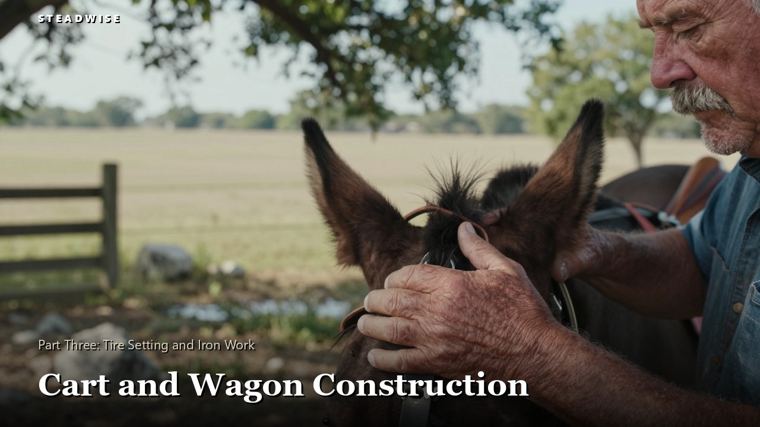
Building your own cart or wagon is one of the most practical investments you can make on a homestead powered by draft animals. A well-constructed…
When planning the heavy work on your 60-acre Fannin County property—plowing fields, moving timber, hauling hay, and maintaining pastures—you'll need…
Training a horse, mule, or ox from scratch is one of the most rewarding—and humbling—experiences in homesteading. Unlike riding, which many people…
The difference between a comfortable, efficient working animal and one that's constantly injured or refusing to work lies in the harness. A poorly…
While plowing is the iconic draft animal work, hauling—moving loads across land—may be more critical to homestead survival. Hauling includes firewood…
In 1920, the United States had roughly twenty-six million working horses and mules on farms — close to forty million counting unbroken stock and…
If you're starting from zero with draft animals, oxen are the smartest choice. Any beef calf can become an ox through castration, they're cheaper…
A working homestead with six draft animals on sixty acres lives or dies by the forage budget. Get it right and the herd grazes itself through eight…
Plowing is the foundation of cultivated agriculture. It breaks compacted soil, buries weeds and residue, incorporates amendments, and prepares…
A draft animal's working life spans decades, and that lifespan is marked by recurring patterns: seasons of heavy work followed by recovery, seasonal…
Steadwise's on-device AI reads these exact chapters and answers with citations — no internet, no tracking, on your desktop and your iPhone. And you can add your own material to this domain anytime.
Start your free 30 days Browse all 53 domains STEADWISE