Every chapter below ships offline, illustrated, and indexed — ask the on-device AI anything in this domain and it answers with a citation to these exact pages.
Home canning seals food in jars and heats it enough to destroy the organisms that cause spoilage, then lets a vacuum form as the jars cool. Done by a…
Drying is the oldest method of food preservation. Long before canning or freezing existed, people dried fruits, vegetables, herbs, and meats in the…
Freezing is one of the easiest and most natural ways to preserve food. It keeps the color, flavor, and nutritional value of fresh food better than…
Sweet spreads made from fruit are among the most satisfying home-canned foods to make, and among the most forgiving to store. Because they combine…
Pickling is one of the oldest ways to keep a harvest from spoiling. Whether you are packing crisp cucumbers in a vinegar brine or letting a crock of…
The grid has been down for thirty-six hours. The ice storm or the tornado or the hurricane remnant has done its work and the family is fine and the…
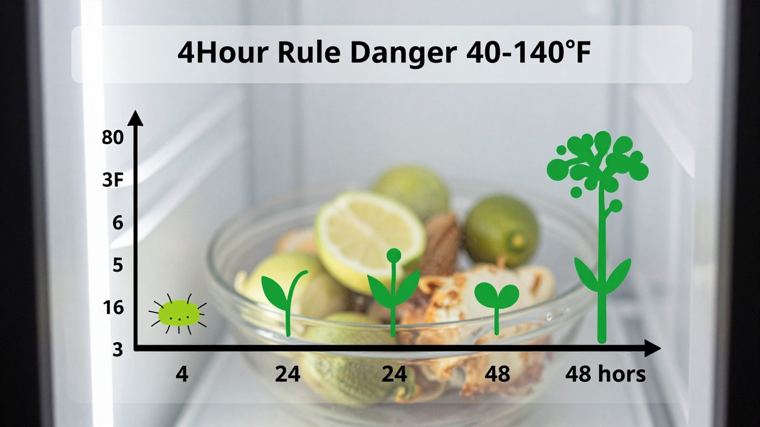
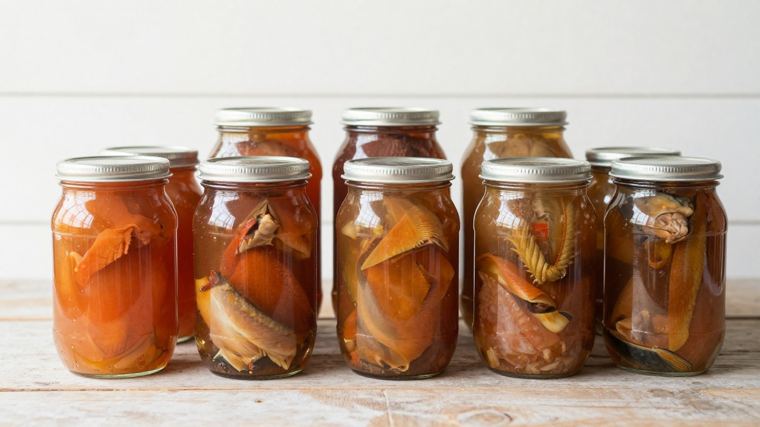
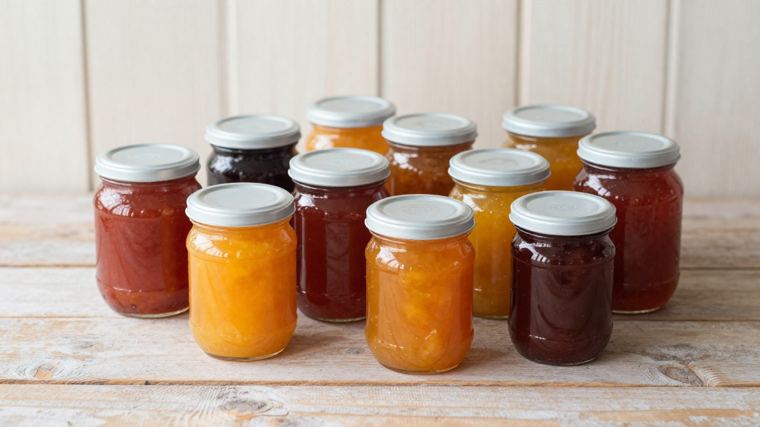
A biogas digester converts organic waste into renewable methane gas for cooking and heating. A simple IBC (intermediate bulk container) system can be…
Making cheese from raw milk using natural cultures is one of the oldest and most reliable preservation methods. Cheese transforms milk into a product…
Fermentation and pickling are ancient preservation methods that require minimal equipment, no cooking, and no electricity. Both preserve vegetables…
Grains are the foundation of food security: wheat berries store 25+ years unchanged, oats and rice last 10-20 years, and corn can be processed and…
Dried herbs concentrate flavor and medicinal compounds, store for 1-3 years without refrigeration, and provide year-round access to plants that grow…
Smoking and curing are among the oldest meat preservation methods and require no electricity, refrigeration, or canning equipment. Both methods…
Sugar supply chains are fragile and often dependent on distant tropical regions. Off-grid sustainability requires producing sweeteners locally. North…
Pressure canning is essential for preserving low-acid foods like meats, vegetables, beans, and soups. While water bath canning relies on boiling…
A root cellar is an underground storage space that maintains cool, humid conditions ideal for storing root vegetables, apples, and other produce for…
Salt is the oldest food preservation method, used for millennia to preserve meat, fish, and vegetables. Salt removes water and inhibits bacterial…
Successful food preservation depends on understanding what grows when in your region. North Texas has two primary growing seasons (spring and fall)…
Solar dehydration is the most energy-efficient food preservation method available to an off-grid homestead. North Texas averages 215 sunny days…
Water bath canning is the most accessible preservation method for high-acid foods in an off-grid setting. It requires no electricity, can use basic…
Reference document.
Reference document.
Reference document.
Reference document.
HGA-00331 View this publication in PDF form to print or download.
Public-domain source text.
Sweet or sour cherries are an acid food, so they are safely processed in a boiling-water canner. Plan on roughly 17-1/2 pounds of cherries for a…
Spiced crab apples are a sweet-and-tart preserve made by simmering whole crab apples in a spiced vinegar syrup. Because they are an acid food, they…
Cranberries are naturally high in acid, so cranberry preserves are processed in a boiling-water canner. The USDA's tested cranberry product is a…
A fruit puree is simply cooked, sieved fruit, packed without added thickeners. Because the fruits used are acid foods, purees are processed in a…
Lemon curd is a thick, smooth spread made from lemon juice and zest, sugar, butter, and eggs. The lemon juice makes the finished curd quite acidic,…
Mayhaws are the small, tart fruit of a southern hawthorn tree, prized for making jelly. The first step is to cook the fruit and extract a clear…
A peach fruit topping is a lightly thickened, sweetened peach sauce for spooning over ice cream, pancakes, or desserts. It is canned exactly like a…
Chile Salsa II is a chunky tomato-and-pepper sauce. The measured vinegar in the recipe supplies the acidity that makes it safe in a boiling-water…
This is a fuller-batch salsa built on meaty paste tomatoes, which give a thicker result without long cooking. The bottled lemon or lime juice in the…
This is a home-style baked-bean-type product: rehydrated dry beans packed in a tomato or molasses sauce. Beans are a low-acid food, so the filled…
You can put up your own fruit-based baby food at home by canning chunk-style or pureed fruit. The key safety rule is that only fruit may be canned…
After processing, jars must cool undisturbed and then be checked for a good vacuum seal before they go into storage.
How well canned food keeps depends heavily on how much air is removed before the jars are sealed. Fresh foods hold anywhere from 10 to more than 30…
A boiling-water canner is the right tool for acid foods — fruits, pickles, jams and jellies, and properly acidified tomatoes. (Low-acid foods such as…
Crushed tomatoes are simply tomatoes cooked in their own juice with no added water — a versatile base for soups, stews, and casseroles. Plan on about…
This is a tomato juice lightly enriched with other vegetables — the home version of a mixed vegetable-tomato juice. To keep the blend safely acidic,…
Combining tomatoes with okra or zucchini makes a tender, stewable mixture — but the added low-acid vegetable lowers the overall acidity, so this…
Clams may be canned whole or minced. Like all seafood, they are a low-acid food and must be processed in a pressure canner. Clams are canned only in…
Home-canned meat stock (broth) is a low-acid food and must be processed in a pressure canner. The method differs slightly for red-meat versus poultry…
Public-domain source text.
Making cheese from raw milk using natural cultures is one of the oldest and most reliable preservation methods. Cheese transforms milk into a product…
Public-domain source text.
Public-domain source text.
Public-domain source text.
Jerky is meat that has been made lightweight and shelf-stable by drying out most of its moisture. About a pound of meat yields only a few ounces of…
Public-domain source text.
Public-domain source text.
Steadwise Food Preservation Supplement — Authored Field Guide
Public-domain source text.
Public-domain source text.
Public-domain source text.
Public-domain source text.
Public-domain source text.
Public-domain source text.
Public-domain source text.
Public-domain source text.
Public-domain source text.
Public-domain source text.
Public-domain source text.
Public-domain source text.
Public-domain source text.
Public-domain source text.
Public-domain source text.
Public-domain source text.
Public-domain source text.
Public-domain source text.
Fermentation and pickling are ancient preservation methods that require minimal equipment, no cooking, and no electricity. Both preserve vegetables…
Butter freezes very well and is a simple way to store a surplus or to take advantage of a good buy. Its high fat content holds up to freezing without…
Avocados do not freeze well whole or in slices. The flesh turns watery and discolored, and the texture breaks down, so the fruit is frozen as a puree…
Freezing is one of the simplest and most natural ways to keep food. By lowering the temperature to 0 degrees F (-18 degrees C) or below, freezing…
Guavas freeze well and keep much of their fragrance and color when packed in syrup. Select firm, fully ripe fruit with good aroma. Avoid overripe,…
Plums and prunes freeze well and keep good color and flavor. Choose firm, fully ripe fruit with deep, even color. Soft, bruised, or overripe plums…
Only the juicy seed sacs, called arils, are frozen from a pomegranate. They freeze very well and keep their bright color and tart-sweet flavor.…
Lemon curd is a soft, cooked spread made from eggs, sugar, butter, and lemon juice and zest. Because it contains eggs and dairy, it is not a…
Many fruits keep better color, flavor, and texture when frozen in a sugar syrup rather than packed dry. The syrup surrounds the fruit, blocks air,…
Shucked oysters freeze well and are a convenient way to keep a catch or a fresh market purchase. Freeze only oysters that are alive and fresh when…
Edible pea pods, such as snow peas and sugar snap peas, freeze well and keep much of their crisp, sweet character when handled quickly. Pick or buy…
Freezing is a good way to save firm green (unripe) tomatoes at the end of the season for later frying. Frozen green tomatoes soften when thawed, so…
Ripe tomatoes freeze easily and are a fast alternative to canning when time is short. Freezing softens the texture, so frozen tomatoes are used in…
Grains are the foundation of food security: wheat berries store 25+ years unchanged, oats and rice last 10-20 years, and corn can be processed and…
Public-domain source text.
Public-domain source text.
Dried herbs concentrate flavor and medicinal compounds, store for 1-3 years without refrigeration, and provide year-round access to plants that grow…
Public-domain source text.
Public-domain source text.
A conserve is a soft spread built from two or more fruits cooked down with sugar, often brightened with citrus and finished with nuts or raisins.…
Jams and jellies set through the balance of fruit, sugar, acid, and pectin. Fill clean half-pint or pint jars to ¼-inch headspace and process in a…
Grape conserve makes the most of Concord-type grapes, whose slip-skins separate easily from their pulp. The skins are kept for color and texture…
Plum conserve is a rich, spoonable spread that combines tart plums with orange, raisins, and pecans. Plums supply ample natural pectin and acid, so…
Uncooked berry jam — often called freezer jam — keeps the bright color and fresh flavor of raw fruit because it is never cooked. Instead of boiling…
Berry jams made without commercial pectin rely on the fruit's own pectin and acid plus a generous measure of sugar, concentrated by boiling until the…
This jam pairs sweet, low-acid blueberries with tart currants. The currants do double duty: they supply both the acid and the extra pectin that…
Cherries are naturally low in pectin, so cherry jam is made with commercially prepared pectin to give it a dependable set. Added pectin also means…
Jelly is made from strained fruit juice, not crushed fruit, so the first step in any no-added-pectin jelly is extracting a clear, flavorful juice.…
Adding commercially prepared pectin is the faster of the two ways to make jams and jellies. Fresh fruits and juices, and even commercially canned or…
Apples are naturally rich in pectin and acid, which makes apple jelly the classic example of a jelly that sets without any commercial pectin. Tart…
Jelly is the clear, firm spread made from strained fruit juice rather than crushed fruit. This version uses powdered pectin for a quick, reliable set…
Grape jelly made with powdered pectin is a fast, dependable way to capture the flavor of Concord-type grapes in a clear, firm spread. Added pectin…
The mayhaw is the small red fruit of a Southern hawthorn, prized for a tart jelly with a flavor between crabapple and cranberry. Made with commercial…
Muscadines and their bronze cousins the scuppernongs are thick-skinned Southern grapes with a musky, distinctive flavor. Slightly underripe fruit…
Strawberries are low in both pectin and acid, which makes them a poor candidate for jelly without help. Using powdered pectin (and a measure of lemon…
Strawberry-rhubarb jelly balances sweet strawberries against tart rhubarb for a bright spring flavor. Made with liquid pectin, it sets quickly and…
A marmalade is a soft spread that carries suspended pieces of fruit or citrus peel. This tomato marmalade combines ripe tomatoes with lemon, orange,…
Preserves hold whole or large pieces of fruit suspended in a thick, slightly jellied syrup. In strawberry preserves the goal is plump, intact berries…
This reduced-sugar grape jelly gets its sweetness from a liquid low-calorie sweetener instead of the large amount of sugar a traditional jelly needs,…
Steadwise Food Preservation Supplement — Authored Field Guide
Public-domain source text.
Smoking and curing are among the oldest meat preservation methods and require no electricity, refrigeration, or canning equipment. Both methods…
Public-domain source text.
Sugar supply chains are fragile and often dependent on distant tropical regions. Off-grid sustainability requires producing sweeteners locally. North…
Public-domain source text.
Steadwise Food Preservation Supplement — Authored Field Guide
Public-domain source text.
A chutney is a sweet-and-tangy preserve built from chopped fruit, vinegar, sugar, and warm spices that are simmered together until thick. Like all…
Watermelon rind pickles turn the firm, pale layer just inside the green skin into translucent, sweet-spiced pickles. They are a classic fruit pickle:…
This crisp, lightly spicy slaw pairs julienned jicama with chayote squash in a sweet-tart pickling liquid. It is a fresh-pack (quick) pickle, meaning…
This relish chops fresh cucumbers and onion into a tangy, dill-scented condiment. A relish is simply chopped vegetables cooked briefly with…
Piccalilli is a thick, tangy relish of chopped green tomatoes, peppers, onions, and cabbage cooked down with vinegar, brown sugar, and pickling…
Sweet cucumber pickle relish is the familiar chopped condiment of cucumbers, sweet peppers, and onion in a sweet-tart brine. It is a fresh-pack…
Corn relish is a bright, sweet-and-sour mix of whole-kernel corn, peppers, celery, and onion. It is a fresh-pack pickle, not a fermented one, so the…
Summer squash relish puts a glut of yellow squash or zucchini to good use as a sweet, mustard-tinged condiment. It is built on the same…
Jerusalem artichokes (sunchokes) are crisp, nutty tubers that hold their crunch beautifully when pickled. They are handled much like jicama in a…
Marinated peppers are blistered, peeled, and packed in a seasoned oil-and-vinegar brine. Bell, Hungarian, banana, or jalapeño peppers all work. This…
Pickled baby carrots are whole small carrots in a sweet, mustard-and-celery brine. They follow the same method as pickled carrot rounds, simply left…
Pickled dilled okra packs whole, tender okra pods into a garlicky, dill-and-hot-pepper brine. It is a fresh-pack pickle, not a fermented one, so the…
This recipe turns end-of-season green tomatoes into sweet-and-spiced pickle slices with onion and warm spices. It is a fresh-pack pickle, not a…
Public-domain source text.
Public-domain source text.
Public-domain source text.
Public-domain source text.
Public-domain source text.
Steadwise Food Preservation Supplement — Authored Field Guide
Pressure canning is essential for preserving low-acid foods like meats, vegetables, beans, and soups. While water bath canning relies on boiling…
A root cellar is an underground storage space that maintains cool, humid conditions ideal for storing root vegetables, apples, and other produce for…
Steadwise Food Preservation Supplement — Authored Field Guide
Salt is the oldest food preservation method, used for millennia to preserve meat, fish, and vegetables. Salt removes water and inhibits bacterial…
Successful food preservation depends on understanding what grows when in your region. North Texas has two primary growing seasons (spring and fall)…
Steadwise Food Preservation Supplement — Authored Field Guide
Steadwise Food Preservation Supplement — Authored Field Guide
Solar dehydration is the most energy-efficient food preservation method available to an off-grid homestead. North Texas averages 215 sunny days…
Steadwise Food Preservation Supplement — Authored Field Guide
Public-domain source text.
Public-domain source text.
Public-domain source text.
Public-domain source text.
Public-domain source text.
Public-domain source text.
Public-domain source text.
Public-domain source text.
Public-domain source text.
Public-domain source text.
Public-domain source text.
Public-domain source text.
Public-domain source text.
Public-domain source text.
Public-domain source text.
Public-domain source text.
Public-domain source text.
Public-domain source text.
Public-domain source text.
Public-domain source text.
Public-domain source text.
Public-domain source text.
Public-domain source text.
Public-domain source text.
Public-domain source text.
Public-domain source text.
Water bath canning is the most accessible preservation method for high-acid foods in an off-grid setting. It requires no electricity, can use basic…
Reference material.
FarmerBostonCookingSchoolCookbook1906.pdf (29.4 MB)
Steadwise's on-device AI reads these exact chapters and answers with citations — no internet, no tracking, on your desktop and your iPhone. And you can add your own material to this domain anytime.
Start your free 30 days Browse all 53 domains STEADWISE