Every chapter below ships offline, illustrated, and indexed — ask the on-device AI anything in this domain and it answers with a citation to these exact pages.
This guide extends leather-working beyond brain tanning (covered in guide 02). It covers vegetable tanning (producing leather suitable for tooling,…
Baskets are among the most useful items on a homestead—they store food, carry loads, hold supplies, and organize daily work. North Texas offers…
Brain tanning is the oldest and simplest method of converting a raw hide into soft, durable leather using resources available on a homestead. The…
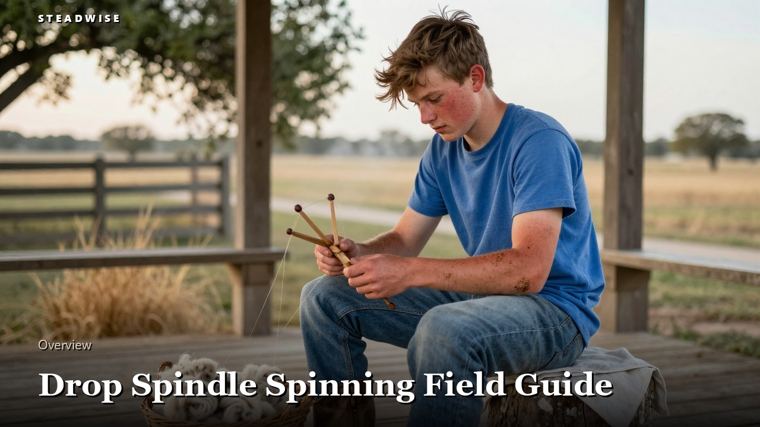
A drop spindle is the most portable, low-tech tool for turning raw fiber into usable yarn. This guide takes you from fiber to finished thread, with…
Felting is the process of tangling wool fibers into a dense, matted cloth without spinning or weaving. There are two methods: wet felting (using…
Cotton, flax, and hemp are the three fiber crops you can grow profitably on a 60-acre North Texas property to produce spinnable fibers entirely from…
A frame loom is the simplest weaving tool. It requires minimal materials (four pieces of wood, nails or pegs, and yarn), produces usable textiles,…
Hand sewing is the foundation of textile work before industrial machines. This guide covers basic stitches, pattern drafting from body measurements,…
Natural dyes create colors impossible to replicate with synthetic chemistry, from earthy browns to brilliant reds and blues. North Texas native…
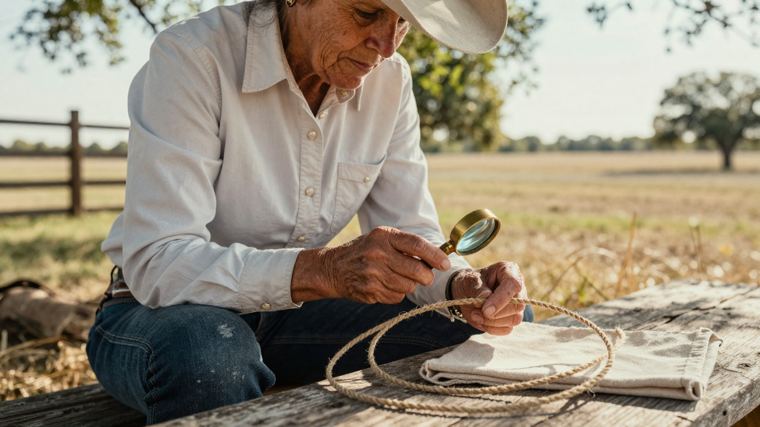
Rope is essential for construction, animal handling, securing loads, and countless homestead tasks. Traditional rope-making requires no machines and…
Reference document.
Reference document.
Reference document.
Reference document.
Weaving interlaces two sets of threads (warp and weft) at right angles to create cloth. Unlike knitting which requires needles, weaving can be…
Baskets are among the most useful items on a homestead. They store food, carry loads, trap fish, hold eggs, and organize countless household needs.…
Blacksmithing is one of the most valuable skills for off-grid self-sufficiency. The ability to make, repair, and modify metal tools and hardware…
Candles are essential for off-grid living where reliable electric lighting is limited or nonexistent. Beyond simple tallow dips, there are many ways…
The ability to repair and create clothing by hand is essential for off-grid self-sufficiency. Sewing machines require electricity, maintenance, and…
The North Texas landscape provides multiple species with excellent fiber qualities for rope production.
Leather is one of humanity's most durable and useful materials. Traditional tanning methods require no electricity, rare chemicals, or industrial…
Creating dyes from plants provides complete control over fabric color using materials available on your property or in North Texas. Natural dyes…
Pottery is fundamental to off-grid living. Ceramic vessels hold water, store food, cook meals, and serve countless household functions. Unlike other…
Soap is one of the most valuable consumables you can produce on an off-grid homestead. Unlike commercial detergents that require refined petroleum…
Spinning is the process of twisting fiber into yarn, transforming raw fibers from plants and animals into usable thread for textiles. This…
Woodworking is the foundation of homestead construction and repair. Without power tools, hand woodworking becomes not just possible but deeply…
Steadwise's on-device AI reads these exact chapters and answers with citations — no internet, no tracking, on your desktop and your iPhone. And you can add your own material to this domain anytime.
Start your free 30 days Browse all 53 domains STEADWISE